
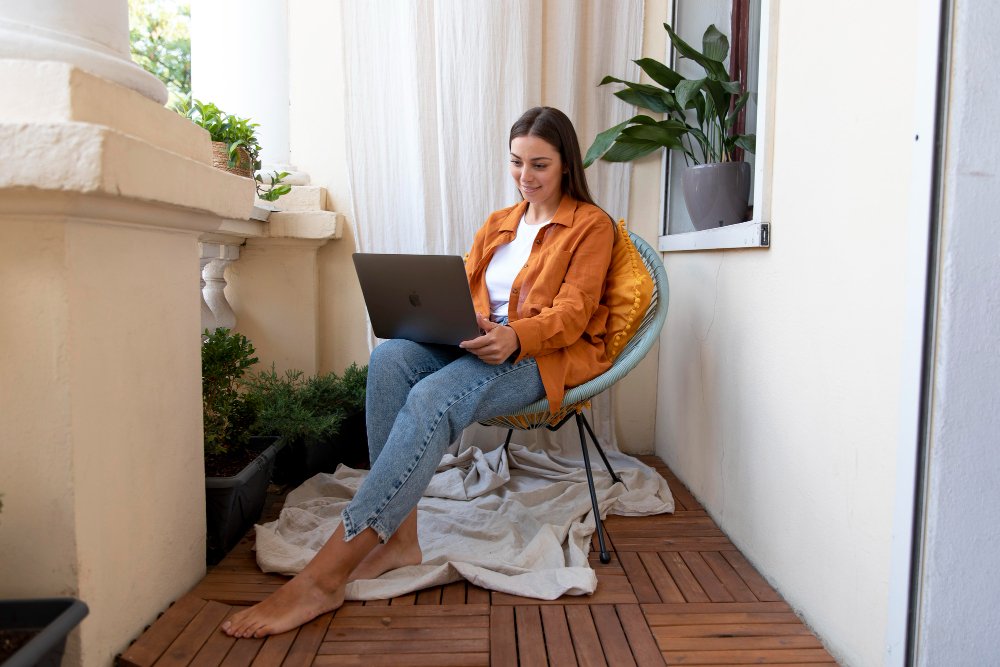
Let’s address the elephant in the room: you’re reading this in sweatpants, aren’t you?
Maybe they’re “nice” sweatpants. Maybe they’re the same ones you’ve worn for three days straight. Either way, you’ve probably wondered if there’s a better answer to what to wear when working from home—something between “full suit” and “did I even change out of pajamas?”
Here’s the truth: what you wear while working from home actually matters. Not because your boss can see your legs on Zoom (they can’t), but because getting dressed—even just a little bit—affects how you work, how you feel, and whether you can jump on a last-minute video call without panic-changing behind your desk.
Why “What to Wear When Working From Home” Is Actually a Productivity Question
You’ve probably heard the advice: “Get fully dressed to work from home!” And you’ve probably ignored it, because whoever said that has never worked a full day in business casual while sitting alone in their home office.
But here’s what actually happens when you think strategically about what to wear when working from home:
Your brain shifts into work mode. There’s real psychology behind “getting dressed for work.” It creates a mental boundary between “home time” and “work time,” even when they happen in the same physical space.
You’re always video-ready. No more panic when your boss sends a “quick call?” Slack message at 2pm and you’re in a coffee-stained t-shirt.
You feel more professional, even when no one’s watching. Confidence matters, even (especially) when you’re alone at your desk.
You maintain basic human standards. Let’s be real—without some structure, you will eventually attend a meeting in the shirt you slept in.
The question isn’t whether to get dressed. It’s figuring out what “dressed” means when your commute is 15 feet and no one can see your pants.
The Work From Home Wardrobe Strategy: Comfortable on Bottom, Presentable on Top
Here’s the formula that actually works for what to wear when working from home:
Top half (waist up): Looks intentional, is camera-ready, makes you feel put-together
Bottom half (waist down): Maximum comfort, zero pretense, nobody needs to know
This isn’t about deceiving people. It’s about being practical. Your legs don’t appear on Zoom calls. Your joggers don’t affect your work quality. Why dress parts of yourself that literally don’t matter?
The Top Half Strategy
Your shirt, sweater, or jacket is doing all the heavy lifting here. It needs to:
- Look good on camera (no weird patterns, no pajama vibes)
- Be comfortable enough to wear for 8+ hours
- Make you feel like a person who has their life together
- Require minimal ironing/maintenance
What this looks like:
- A solid-color sweater or sweatshirt (elevated, not ratty)
- A button-up shirt in a wrinkle-resistant fabric
- A structured cardigan or lightweight blazer
- A nice t-shirt or polo (emphasis on “nice”)
- Any top you’d wear to a coffee shop without feeling underdressed
What this is NOT:
- Your gym clothes
- Anything with stains or holes
- Pajama tops (even the cute ones)
- Shirts so old they’ve developed sentience
- Anything you wouldn’t want screenshotted in a meeting
The Bottom Half Strategy
Your pants have one job: be comfortable. That’s it.
Great bottom options for working from home:
- Joggers (the elevated kind or the regular kind, doesn’t matter)
- Soft lounge pants
- Leggings or athletic tights
- Comfortable jeans if that’s your thing
- Pajama pants (the secret is safe with me)
- Shorts when it’s hot (your air conditioning bill will thank you)
The only rules:
- You should be able to sit comfortably for hours
- Quick trip to answer the door? Not embarrassing
- Unexpected need to stand during a call? You’re covered
- Machine washable (obviously)
What to Actually Wear: Scenario-Specific Outfits
Regular Workday (Camera Off)

This is your default “what to wear when working from home” outfit when no meetings are scheduled.
The goal: Feel dressed enough to be productive, comfortable enough to forget about your clothes.
The outfit:
- Top: A crew neck sweatshirt, casual sweater, or comfortable button-up (untucked is fine)
- Bottom: Whatever brings you joy—joggers, leggings, soft pants
- Shoes: Slippers, slides, or barefoot (this is your house)
Why it works: You look like a human being if you need to hop on camera, but you’re not wearing anything uncomfortable or restrictive.
Pro tip: Keep this outfit neutral and solid-colored. Patterns and graphics don’t always photograph well on camera if you need to turn video on unexpectedly.
Video Meetings (Internal Team)
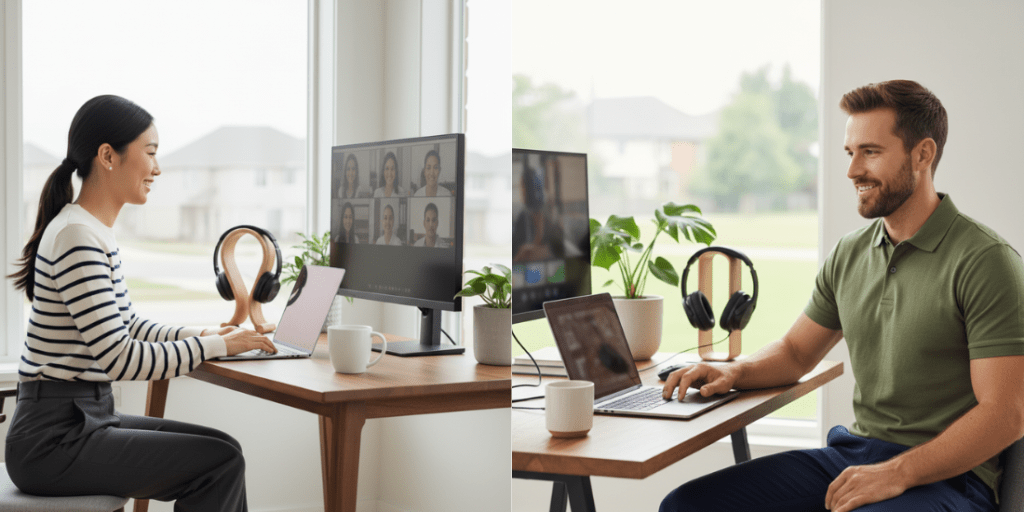
For regular team calls where everyone knows each other and nobody’s trying to impress anyone.
The goal: Look professional enough that no one’s distracted, comfortable enough that you forget you’re on camera.
The outfit:
- Top: Sweater, structured cardigan, button-up, or nice knit top in a solid color
- Bottom: Still maximum comfort (they can’t see it)
- Optional: Simple jewelry (small earrings, simple necklace)
Colors that work best on camera:
- Jewel tones (navy, emerald, burgundy)
- Muted earth tones (olive, rust, camel)
- Soft neutrals (gray, cream, soft white)
Colors to avoid:
- Bright white (can create glare)
- All black (can look too formal or wash you out)
- Neon anything (please)
- Busy patterns (stripes, checks, small prints all look weird on camera)
Client Calls or Important Presentations

When it matters what you’re wearing and people are actually paying attention.
The goal: Command respect, look trustworthy, minimize any chance someone’s focusing on your outfit instead of your words.
The outfit:
- Top: Blazer, structured cardigan, or professional button-up
- Bottom: Okay fine, wear actual pants for this one (in case you need to stand)
- Layer: A blazer or structured jacket adds instant credibility
- Grooming: Make sure hair is done, makeup if you wear it, looking polished
The credibility formula:
- Structured top layer (blazer, cardigan-jacket hybrid)
- Solid, professional colors (navy, charcoal, deep jewel tones)
- Minimal, professional accessories
- Good lighting (this matters as much as the outfit)
Real talk: For very important calls, wear full outfit including pants. Murphy’s law says you’ll need to stand up to grab something exactly when you’re in your oldest sweatpants.
Deep Focus Days (No Meetings)

When your calendar is blissfully empty and you need to actually get work done.
The goal: Wear something that signals “I’m working” to your brain but doesn’t restrict your movement or comfort in any way.
The outfit:
- Top: Soft, fitted long-sleeve tee or comfortable sweatshirt
- Bottom: The comfiest thing you own
- Layer: Cozy cardigan or hoodie if you get cold
- Shoes: Whatever makes your feet happy (probably nothing)
The psychology here: You’re still “getting dressed” which creates the work mindset, but you’re not wearing anything that will distract you or need adjusting. This is about comfort and focus, not presentation.
Optional upgrade: Throw a structured cardigan or light jacket nearby. If a surprise meeting pops up, you can layer it on in 3 seconds and look intentional.
Friday Casual (When Everyone’s Half-Checked Out Anyway)
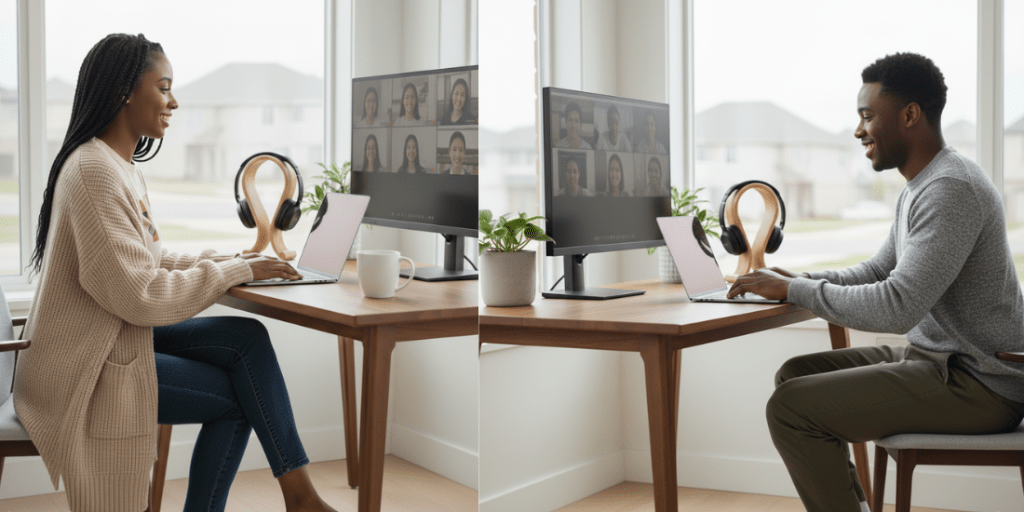
The goal: Signal that it’s almost the weekend while still looking like you’re technically working.
The outfit:
- Top: Nice t-shirt, polo, henley, or casual sweater
- Bottom: Jeans, comfortable pants, whatever
- Vibe: “I’m working but I’m also thinking about weekend plans”
Why Fridays are different: Everyone’s dressed slightly more casually. It’s the perfect day to test whether that new comfortable shirt still looks professional on camera.
The “Always Be Ready” System for Working From Home
Here’s the secret to never stressing about what to wear when working from home: have your go-to outfits ready.
Create your “meeting uniform”:
- 3-4 tops that look good on camera and are comfortable
- 1-2 blazers or structured cardigans for layering
- Your comfiest bottom options that you can wear all day
- Keep them clean and accessible
The 5-minute prep routine:
- Check your calendar first thing
- If you have meetings: put on a camera-ready top
- If you don’t: wear whatever’s comfortable
- Keep a “upgrade layer” (blazer/cardigan) within arm’s reach
The emergency kit:
- Lint roller at your desk (for that pet hair that appears from nowhere)
- Stain pen (coffee spills know when you have important calls)
- Backup nice top in your office closet
- Breath mints or gum (you haven’t talked to a human in 6 hours)
The Common Work From Home Clothing Mistakes
Mistake #1: Never Getting Dressed
Spending all day in actual pajamas will eventually affect your mental state. You don’t need business formal, but you need something that signals “work time” to your brain.
The fix: Even on no-meeting days, change into dedicated “work comfortable” clothes. This creates a boundary.
Mistake #2: Dressing Too Formally
Wearing a full suit at home when you’re sitting alone feels absurd because it is absurd.
The fix: Match your outfit to your actual day. Conference room presentation attire isn’t necessary for solo Slack work.
Mistake #3: Forgetting About Video Quality
That shirt that looks fine in person might have patterns that strobe on camera, or colors that wash you out under your lighting.
The fix: Test your outfits on camera. What looks good in your mirror might look terrible in Zoom.
Mistake #4: The Same Outfit Every Single Day
Yes, Steve Jobs wore the same thing daily. You are not Steve Jobs. Variety helps your mental state.
The fix: Have 4-5 rotation outfits. Enough variety you don’t feel monotonous, few enough that you’re not making decisions.
Mistake #5: Neglecting Everything Else
Your outfit doesn’t matter if your hair is a disaster and you look like you haven’t slept in days.
The fix: Basic grooming routine. Brush your hair. Wash your face. Look like someone who occasionally sees daylight.
Building Your Work From Home Wardrobe on a Budget
You don’t need a new wardrobe to figure out what to wear when working from home. You need maybe 5-7 good pieces.
Priority investments (under $200 total):
Two solid-color sweaters or sweatshirts ($30-50 each)
These are your workhorses. Comfortable, camera-ready, versatile. Choose neutral or jewel tones.
One structured layer ($40-80)
A blazer, cardigan-jacket, or structured sweater you can throw over anything to look instantly polished.
Two pairs of comfortable bottoms ($25-40 each)
Joggers, lounge pants, or whatever makes sitting at a desk bearable. If anyone gives you grief about this, they’re not working from home correctly.
Three nice t-shirts or casual tops ($15-25 each)
For the days between “too casual” and “too formal.” Upgrade from your free t-shirt collection.
Optional but helpful:
- One pair of comfortable jeans ($30-60)
- Button-up shirt in wrinkle-resistant fabric ($30-50)
Where to shop:
- Gap Factory (affordable, quality basics)
- Everlane (slightly more, very good basics)
- Old Navy (surprisingly solid comfortable workwear)
- Amazon Essentials (hit or miss, but cheap enough to try)
- Athleta, Lululemon (if you have the budget, their pieces last)
The Real Answer to “What to Wear When Working From Home”
Here’s what nobody tells you: the perfect work from home outfit is whatever makes you feel productive and comfortable while being camera-ready if needed.
For some people, that’s a sweater and joggers. For others, it’s a button-up and jeans. Some people genuinely work better in business casual. Some people need maximum comfort to focus.
The only universal rules:
- Change out of actual sleepwear
- Have something camera-ready accessible
- Be comfortable enough to focus on work
- Feel put-together enough that your brain registers “work mode”
Everything else is personal preference.
The test: Can you answer these yes?
- Could you hop on a video call in the next 60 seconds without panic?
- Do you feel productive in this outfit?
- Are you comfortable enough to wear this for 8 hours?
- Would you be fine if a neighbor saw you in this?
If yes to all four, you’ve solved what to wear when working from home.
Your Quick Reference Guide
For most days: Comfortable top that looks intentional + your comfiest bottoms
For meetings: Sweater or button-up + structured layer nearby
For important calls: Blazer or structured jacket + actual pants (just in case)
For deep work: Whatever signals “work mode” to your brain while maximizing comfort
Always have ready:
- 3-4 camera-ready tops
- 1-2 structured layers for quick upgrades
- Comfortable bottoms you can wear all day
- Emergency backup outfit
What to wear when working from home isn’t about following rules. It’s about finding the balance between comfort and professionalism that works for your job, your meetings, and your mental state.
Dress for the work you’re doing that day. If you’re in back-to-back client calls, dress accordingly. If you’re writing code alone for 8 hours, maximize comfort. Adjust as needed.
The goal isn’t to look like you’re going to an office. The goal is to feel professional, stay comfortable, and be ready for anything your workday throws at you—including that surprise video call at 2:47pm when you thought your day was done.
Now go put on a real shirt. You’ll feel better.
You Might Also Enjoy:




 EA and Beyond
Leave a comment