

Are you feeling stuck in your job search, or perhaps just a little lost on your ultimate professional path? It’s time to stop just thinking about your ideal future and start seeing it. Enter the career mood board—a dynamic, visual tool that can transform abstract hopes into concrete, actionable goals.
Ready to gain clarity and inject some serious inspiration into your professional development? Here is your complete guide on how to create a career mood board.
What Is a Career Mood Board?
A career mood board is a curated collection of images, colors, textures, words, and affirmations that visually represent your desired professional life, career goals, and ideal work environment. Think of it as a creative roadmap for your career journey—it goes beyond a simple resume or to-do list to capture the feeling and vision of professional success that truly resonates with you.
Why Create a Career Mood Board?
The benefits of this simple career planning exercise are profound. Creating a mood board can help you:
- Gain Clarity: By externalizing your dreams, you clarify what you genuinely want, helping you define concrete career objectives.
- Stay Motivated: A visual reminder of your professional development aspirations keeps you inspired and focused, especially when the job search gets tough.
- Identify Themes: You might uncover surprising common threads in your choices—a specific work style, a need for more creativity, or a yearning for a particular company culture.
- Practice Visualization: Visualization is a powerful technique for achieving goals. Seeing your future daily helps your mind move toward those outcomes.
How to Create Your Career Mood Board
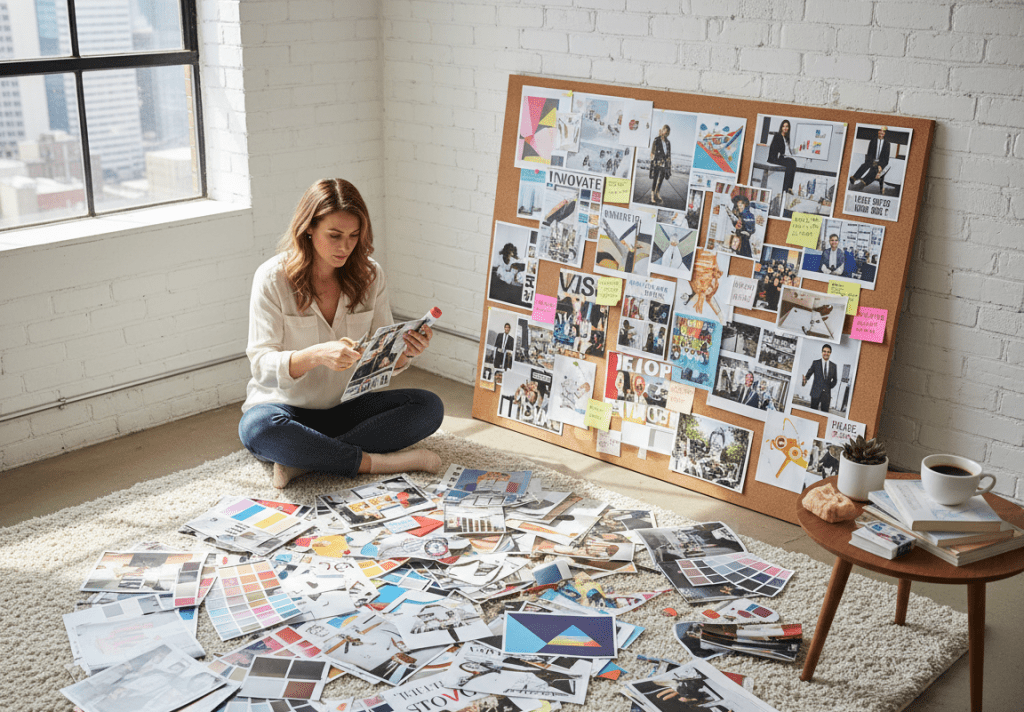
Whether you’re aiming for a major career change or just looking for a promotion, follow these seven steps to build a powerful vision board.
Step 1: Gather Your Materials
Decide if you’re going Digital vs. Physical.
- Physical: You’ll need a corkboard or poster board, scissors, glue, magazines, paint swatches, fabric scraps, and colored paper. This option offers a tactile, hands-on experience.
- Digital: Use a platform like Pinterest, Canva, or Milanote. This is easy to update and view on your phone or desktop which is perfect for the modern career path planner.
Step 2: Reflect on Your Career Goals
Before you cut or click, spend time with a pen and paper. Ask yourself the big questions about your ultimate professional success:
- What does my ideal workday look like?
- What skills do I want to master?
- What industry or company culture do I want to be part of?
- What impact do I want to have?
- What is the lifestyle I want my career to support? (e.g., travel, remote work, specific income)
Step 3: Collect Inspiring Images and Content
This is the fun part! Start collecting anything that visually represents your answers from Step 2. Don’t limit yourself to literal career images.
Examples of Career Mood Board Elements:
| Category | Example Elements |
| Aesthetic | Images of ideal office spaces, beautiful cityscapes (if you want to relocate), or inspiring travel spots (for work/life balance). |
| Skills & Roles | Logos of target companies, photos of people doing the job you want, images representing desired technical skills (e.g., coding screens, a public speaker). |
| Lifestyle | Pictures of hobbies, specific houses, healthy food, or anything that represents the quality of life you want to achieve through your career. |
| Inspiration | Quotes from mentors, industry icons, or articles about professional growth. |
Step 4: Organize Your Content
Lay out your collected images and snippets. Look for logical groupings or themes. You might dedicate one section to ‘Daily Work,’ another to ‘Long-Term Vision,’ and a third to ‘Company Culture.’ This organization will give your board structure and make it easier to read.
Step 5: Add Words and Affirmations
Images are powerful, but words anchor your meaning. Integrate themes like “leadership,” “innovation,” “growth,” “remote work,” or “financial independence.”
- Action-Oriented Phrases: “Lead with integrity,” “Master new skills,” “Be a visionary.”
- Specific Roles: “Senior Marketing Director,” “UX Designer,” “Entrepreneur.”
Step 6: Assemble Your Board
Start assembling your board! Don’t overthink the artistic layout—the goal is to create a piece that is visually engaging to you. Overlap images, use different fonts, and let the process be intuitive. Remember, this is a tool for career visualization, not a gallery piece.
Step 7: Display and Update Regularly
Your career mood board is only effective if you see it! Place your physical board above your desk or set your digital version as your desktop wallpaper. Commit to looking at it for a few minutes each day.
Your career is a living thing, so your board should be too. Review and update it every 6–12 months. Did you achieve a goal? Replace it with a new one!
Start Building Your Vision Today!
A career mood board is a proven technique for unlocking your true potential and providing a clear focus for your professional journey. Stop letting your career path happen to you, and start intentionally building the future you want. Happy planning!
You Might Also Enjoy:




 EA and Beyond
Leave a comment