
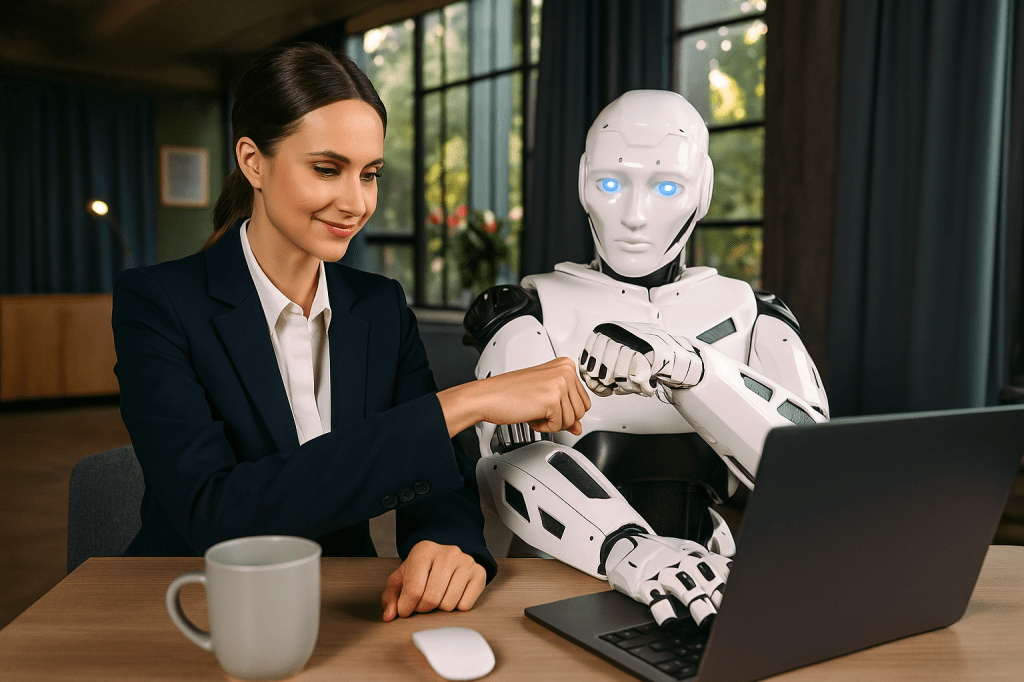
Let’s have a heart-to-heart about something that’s been keeping many of us up at night: Is artificial intelligence going to replace executive assistants?
I get it. The question feels heavy, especially when you see AI tools popping up everywhere, promising to schedule meetings, draft emails, and manage calendars. But here’s what I want you to know, and I’m speaking as someone who’s been in this industry long enough to see trends come and go: Your value as a human executive assistant isn’t going anywhere. In fact, it’s about to become more precious than ever.
Understanding the AI Executive Assistant Landscape
First, let’s acknowledge the elephant in the room. AI executive assistant tools are getting pretty sophisticated. They can handle basic scheduling, send routine follow-ups, and even draft simple correspondence. Companies like Clockwork, x.ai, and various AI-powered calendar assistants are making waves in the productivity space.
But here’s the thing that tech companies don’t want to admit: AI is really good at tasks, but it’s terrible at relationships. And guess what the executive assistant role is fundamentally about? That’s right – relationships, intuition, and human connection.
Where AI Executive Assistants Excel (And It’s Okay to Admit It)
Let me be honest with you because that’s what a good mentor does. AI tools are genuinely helpful for:
Routine scheduling tasks like finding meeting times when everyone’s available or sending standard calendar invites. These tools can scan multiple calendars faster than we can and suggest optimal meeting times.
Data entry and basic research such as pulling contact information, updating databases, or gathering preliminary research on meeting attendees.
Email sorting and filtering to help prioritize messages and flag urgent communications.
Travel booking basics like finding flights that match specific criteria or hotels within budget ranges.
Here’s my advice: Don’t fight these tools. Embrace them. Use AI to handle the mundane stuff so you can focus on what makes you irreplaceable.
The Irreplaceable Human Executive Assistant Skills
Now let’s talk about why you’re not going anywhere, and why smart executives will always choose human EAs over AI alternatives:
Emotional Intelligence and Relationship Management
You know when your executive is stressed about a board presentation and needs someone to anticipate their needs before they even voice them. You can read between the lines of a tense email chain and know exactly how to smooth things over. You understand office politics and can navigate delicate situations with grace.
AI can’t read a room. It can’t sense when someone’s having a bad day or know that this particular client always needs extra hand-holding. These soft skills aren’t just nice to have; they’re essential for senior-level support.
Complex Problem-Solving and Strategic Thinking
When a crisis hits (and it will), you don’t just execute tasks. You think strategically. You juggle multiple moving pieces, make judgment calls, and often serve as your executive’s strategic partner. You understand context, company culture, and the bigger picture in ways that AI simply cannot.
Remember that time when three urgent meetings conflicted, the catering fell through, and a key presenter got sick all in the same morning? You didn’t just reschedule meetings. You prioritized based on business impact, found creative solutions, and probably saved the day. That’s human intelligence at work.
Trust and Confidentiality
Executives share sensitive information with their EAs because they trust human judgment and discretion. You handle confidential salary negotiations, merger discussions, and personal matters. The level of trust required for these responsibilities goes far beyond what most leaders are comfortable extending to AI systems.
The Future Executive Assistant: Human + AI Partnership
Here’s where the magic happens, and this is the future you should be preparing for: You won’t be replaced by AI, but you might be replaced by another EA who knows how to work effectively with AI.
The most successful executive assistants of the future will be those who:
Leverage AI for efficiency while focusing their human energy on high-value activities. Use AI scheduling tools to handle routine appointments, then spend that saved time on strategic planning and relationship building.
Become AI-literate without becoming AI-dependent. Learn which tools genuinely help your workflow and which ones are just flashy distractions.
Double down on uniquely human skills like emotional intelligence, creative problem-solving, and strategic thinking. These become your competitive advantages.
Practical Steps to Future-Proof Your Executive Assistant Career
Okay, enough theory. Let’s talk action steps:
Skill Development Priorities
Master project management beyond just scheduling. Learn methodologies like Agile or Scrum. Many EAs are evolving into chief of staff roles, and project management skills are crucial.
Develop business acumen by understanding your company’s industry, competitors, and market dynamics. The more you understand the business, the more strategic your support becomes.
Enhance your communication skills across all mediums. In a world where AI can draft basic emails, your ability to craft nuanced, persuasive, and emotionally intelligent communications becomes more valuable.
Learn basic data analysis to help your executive make informed decisions. You don’t need to become a data scientist, but understanding how to interpret reports and identify trends is incredibly valuable.
Technology Integration Strategy
Start experimenting with AI tools now, but be selective. Try calendar scheduling assistants, email management tools, or research aids. Figure out what actually saves you time versus what creates more work.
Don’t try to adopt every new AI tool that comes out. Focus on ones that integrate well with your existing systems and genuinely improve your efficiency.
Most importantly, always maintain the human touch. Use AI to handle the groundwork, then add your personal insight, relationship knowledge, and strategic thinking.
Building Your Personal Brand as an Executive Assistant
In this evolving landscape, your personal brand matters more than ever. Position yourself as a strategic partner, not just a task executor.
Document your wins. Keep track of problems you’ve solved, money you’ve saved, or processes you’ve improved. These stories demonstrate your strategic value.
Network within your industry and with other executive assistants. Share knowledge about tools, strategies, and best practices. The EA community is incredibly supportive, and we all rise together.
Consider specializing in a particular area like event planning, international business, or specific industries. Specialization often commands higher salaries and more job security.
The Economic Reality: Why Human EAs Remain Cost-Effective
Let’s talk numbers for a minute. While AI tools might seem cheaper upfront, they often require significant setup time, ongoing management, and still need human oversight. A skilled executive assistant provides immediate value, adapts quickly to changing needs, and brings institutional knowledge that AI simply can’t replicate.
Plus, many AI tools work best when they’re managed by someone who understands both the technology and the executive’s preferences. Guess who’s perfectly positioned for that role? You are.
Your Mindset Matters Most
I want to leave you with this: The future belongs to executive assistants who see themselves as strategic partners, not just administrative support. You’re not competing with AI; you’re collaborating with it to become more effective and valuable.
Stop worrying about being replaced and start thinking about how to become irreplaceable. Focus on developing the skills that make you uniquely human: empathy, strategic thinking, relationship building, and complex problem-solving.
The executives who truly understand the value of excellent support will always choose a skilled human EA who leverages technology smartly over a purely AI-based solution. Your job isn’t going anywhere, but it is evolving. And honestly? That evolution is going to make your role more interesting, more strategic, and more rewarding than ever before.
You’ve got this. The future of executive assistance is bright, and there’s absolutely a place for you in it. Just make sure you’re ready to claim that place with confidence.
Ready to Embrace the Future?
The conversation around AI and executive assistants isn’t going away, and that’s actually a good thing. It’s pushing all of us to level up, think strategically, and demonstrate our unique value.
Remember: You’re not just an executive assistant. You’re a strategic partner, a problem solver, and often the person who keeps everything running smoothly behind the scenes. AI might be able to schedule a meeting, but it can’t build the relationships, read the room, or provide the strategic insight that makes you invaluable.
The future is human + AI, not human versus AI. Position yourself accordingly, and you’ll not only survive this technological shift but thrive in it.
What’s your experience been with AI tools in your executive assistant role? Have you found any that genuinely improve your efficiency? I’d love to hear your thoughts and continue this conversation.




 EA and Beyond
Leave a comment