
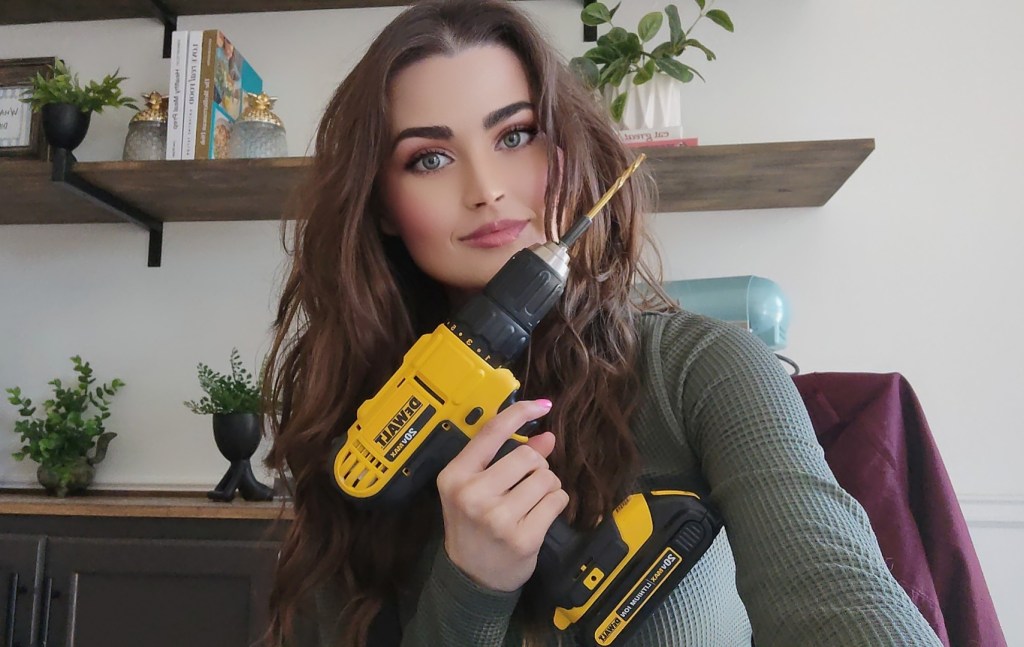
You know that feeling when you’re knee-deep in sawdust with your Pinterest board open for the hundredth time? That’s my happy place. What I never expected was how my DIY obsession would make me a better Executive Assistant than any training program ever could.
Lesson 1: Project Management is Project Management
When you’ve survived a full bathroom renovation armed with nothing but YouTube tutorials and sheer determination, managing your executive’s complex calendar seems far less daunting. Just like I learned to break down a furniture flip into manageable steps (sand, prime, paint, repeat), I now instinctively chunk big work projects into bite-sized pieces. That massive board presentation? It’s just another project plan, minus the power drill.
The same timeline pressure applies too. When you’re racing against drying paint or setting concrete, you learn to be ruthlessly efficient with your time. This naturally carried over to juggling multiple priorities at work. I can now estimate how long tasks will take with the same precision I use to plan a weekend project (though thankfully, work rarely requires emergency hardware store runs).
Lesson 2: The Power of the Right Tools
Speaking of power drills (my personal favorite), DIY taught me the importance of having the right tools and knowing how to use them. Just like I wouldn’t use a screwdriver when I need a drill, I stopped trying to manage complex travel itineraries in basic email and invested in proper travel management software.
My tech stack is now as carefully curated as my toolbox, and trust me, both are impressively organized. I wouldn’t attempt to hang cabinets with a butter knife any more than I’d try to coordinate a multi-city executive trip with sticky notes.
Lesson 3: Resourcefulness Under Pressure
The art of resourcefulness is another gem I’ve carried over from my DIY adventures. When you’ve figured out how to transform a dated dresser into a statement piece using only $30 and some creative thinking, finding last-minute solutions for work challenges becomes second nature.
Need to reorganize a jam-packed schedule to fit in an urgent investor meeting? That’s nothing compared to figuring out how to fit a sectional sofa through a narrow doorway. (Spoiler alert: it involved removing the legs and a lot of patience.)
Lesson 4: Visual Communication Skills
Pinterest might be my virtual home, but it’s taught me valuable lessons about visualization and planning. Those perfectly curated boards aren’t just eye candy – they’re practice for organizing information and presenting options clearly.
When my executive needed to choose between three office space options last month, I created a comparison that looked like my Pinterest boards—clean photos, key stats, and pros/cons laid out visually. Decision made in 5 minutes instead of 5 meetings. No wonder they always appreciate my well-structured briefing notes!
Lesson 5: Learning from Failures
Perhaps the most valuable lesson came from my many (many) DIY fails. That time I picked the wrong paint finish? Or when I measured once and cut twice? Each mistake taught me that perfection isn’t the goal – progress is.
In my role as an EA, this translates to being adaptable and solution-focused. When things don’t go as planned, I channel my inner DIY problem-solver and find another way. A cancelled flight? Time to get creative with alternative routes. A double-booked conference room? I’ve got three backup plans ready.
Lesson 6: Confidence Through Competence
The confidence I gained from mastering power tools and conquering home improvement projects has been invaluable in my professional life. After you’ve successfully installed a board and batten accent wall, pushing back on unrealistic meeting requests or negotiating with vendors feels much less intimidating.
There’s something about knowing you can literally build something from scratch that makes workplace challenges feel manageable. If I can figure out electrical wiring, I can certainly figure out why the video conference isn’t working.
Lesson 7: Attention to Detail Matters
And let’s talk about attention to detail – a skill that’s crucial in both worlds. Just as a sloppy paint job can ruin the whole look of a room, missing small details in meeting preparations can impact your executive’s effectiveness. I apply the same meticulous approach to proofreading documents as I do to measuring trim work.
Measure twice, cut once? In EA terms, that’s double-check the calendar invite details before sending to 20 board members.
The DIY Advantage
So while my colleagues might raise an eyebrow at my endless HGTV references or my tendency to reorganize the supply closet with the same enthusiasm as a pantry makeover, my DIY background has become my secret weapon in executive assistance. It’s given me a unique perspective on problem-solving, project management, and persistence that you can’t learn from any training manual.
The best Executive Assistants think like general contractors—we see the big picture, manage the details, and always have the right tool for the job. We know that sometimes you need to demo before you can rebuild, and that the most beautiful results often come from the messiest processes.
Now, if you’ll excuse me, I need to go color-code my calendar with the same precision I used to design my latest gallery wall. And yes, I might be streaming a renovation show while I do it—for professional development purposes, of course.
So the next time someone questions why I’m watching Property Brothers during lunch, I’ll remind them it’s research. After all, learning how to transform spaces and manage complex projects are exactly the skills that make great Executive Assistants indispensable.




 EA and Beyond
Leave a comment